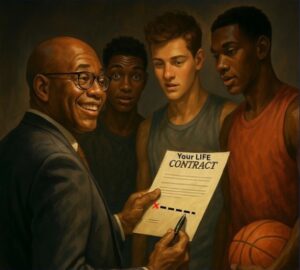
The Dangers of Client Poaching
- Risk to the Athlete's Career & Financial Well-Being
This can lead to a "race to the bottom," where agents are forced to engage in increasingly aggressive and unethical tactics to retain their clients. This not only damages the reputation of the industry as a whole but also creates an environment of unfair competition where ethical agents are at a disadvantage.
An agent who is willing to act unethically towards their employer is more likely to act unethically towards their clients. Poaching clients often involves making promises that cannot be kept or misrepresenting the agent's ability to secure better deals. This can lead to athletes making ill-informed decisions that can have a detrimental impact on their careers and financial security. Furthermore, an agent who is focused on their own financial gain rather than the best interests of their client is more likely to push for short-term gains at the expense of long-term career development. This can be particularly damaging for young athletes who are just starting their careers and are in need of sound, unbiased advice.
The Dangers of Inexperienced Representation
The allure of the sports industry can attract individuals from all walks of life, including those who believe they can transition into athlete representation later in their careers with no prior experience. However, the reality is that sports representation is a highly specialized field that requires a unique combination of skills, knowledge, and connections. Entrusting an athlete's career to an inexperienced representative, regardless of their age or success in other fields, is a significant gamble that can have devastating consequences.
Lack of Industry Knowledge and Connections
The sports industry is a complex ecosystem with its own set of rules, regulations, and unwritten codes of conduct. An experienced agent has a deep understanding of this ecosystem and has spent years building a network of contacts that can be leveraged to create opportunities for their clients. An inexperienced agent, on the other hand, is starting from scratch and will have to learn on the job, which can be a costly and time-consuming process. This lack of knowledge and connections can result in missed opportunities, poorly negotiated contracts, and a failure to protect the athlete's best interest.
Inability to Provide Comprehensive Career Guidance
A good sports agent is more than just a contract negotiator; they are a trusted advisor, a mentor, and a career strategist. They provide guidance on everything from brand building and financial planning to post-career transitions. An inexperienced agent, lacking the context and perspective that comes with years of experience, is simply not equipped to provide this level of comprehensive guidance. This can leave the athlete vulnerable to making poor decisions that can have a lasting impact on their career and their life after sports.
Vulnerability to Exploitation
The sports industry is rife with potential pitfalls, and an inexperienced agent is more likely to fall into them. From exploitative contract clauses to ill-advised investment opportunities, there are countless ways for an athlete to be taken advantage of. An experienced agent has seen it all before and knows how to protect their clients from these dangers. An inexperienced agent, on the other hand, is more likely to be swayed by the promise of a quick buck, which can put the athlete's financial future at risk. The demographic data on sports agents supports this, with 62% of agents being over the age of 40, and the average age being 44.5 [2]. This indicates that the industry is dominated by seasoned professionals, and for good reason.
Conclusion
The sports representation industry plays a crucial role in the lives and careers of athletes. It is an industry that demands the highest standards of professionalism, ethics, and experience. The practice of poaching clients from former employers is a clear violation of these standards and a disservice to the industry and its clients. Similarly, the notion that anyone can become a successful sports agent without prior experience is a dangerous misconception that can have devastating consequences for athletes. Players, student-athletes, and parents must be vigilant in their selection of a representative and should only entrust their careers to those with a proven track record of success and a commitment to ethical conduct.
-Source: Workplace Law (2019, October 16) Sports agency sues former employees for poaching clients. https://www.workplacelaw.com.au/posts/sports-agency-sues-former-employees-for-poaching-clients
[2] Zippia, (2025),. Sports Agent Demographics and Statistics, https://www.zippia.com/sports-agent-jobs/demographics/